Looking for Faith-Based Therapy? Here Are 10 Things to Know Before Your First Session

If you are searching for faith based therapy, you may be carrying more than one question: Will my therapist understand my Christian beliefs? Will I be judged? Do I have to pray in every session? Can counseling really help if my pain feels spiritual, emotional, and relational all at once?
These are honest questions, especially when therapy is new. Beginning counseling can feel vulnerable, but you do not have to have everything figured out before you make an appointment. A good first session is not about proving that you are strong or explaining your entire life perfectly. It is about creating a safe place to begin.
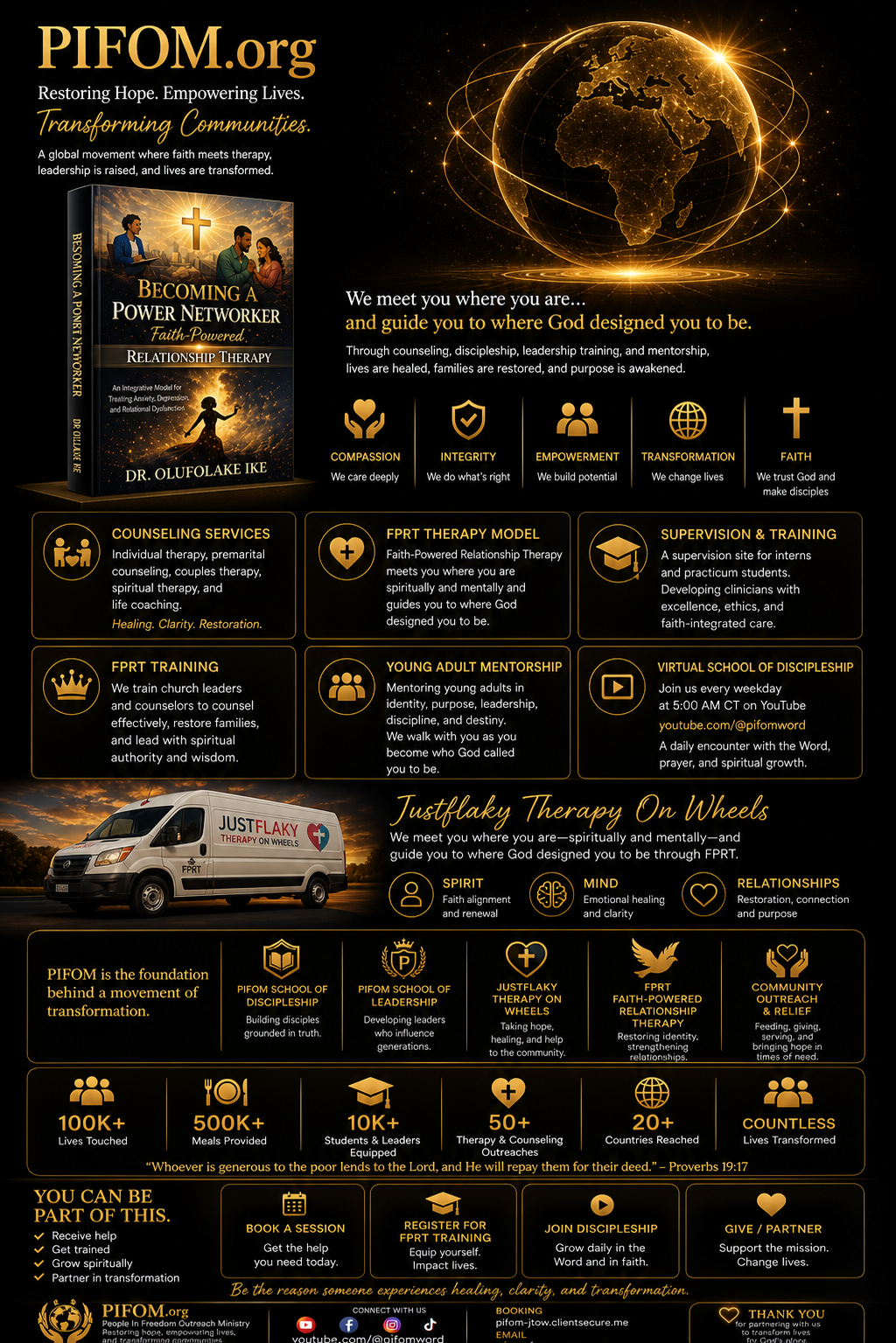
At Positive Influence Family Outreach Ministry (PIFOM), our approach brings professional therapeutic practices and biblical principles together through Faith Powered Relationship Therapy, or FPRT. Here are ten things to know before your first session.
1. Your first session is usually about connection, not instant solutions
The first session generally gives you and your therapist time to get acquainted. You may discuss what brought you to therapy, what has been most difficult recently, and what you hope will change.
You are not expected to tell every detail of your story immediately. Healing often happens in stages. You can share what feels appropriate for this moment and allow trust to develop over time.
Your therapist may also explain confidentiality, scheduling, fees, communication policies, and the circumstances in which confidentiality may have limits, such as an immediate risk of serious harm. Understanding these details can help you feel more secure.
2. Faith-based therapy should respect your faith journey
Faith based therapy is not meant to pressure you into performing spiritually or pretending that everything is fine. Your relationship with God may be strong, uncertain, changing, or wounded. You may have experienced church hurt, spiritual abuse, grief, doubt, or disappointment.
A compassionate therapist makes room for your honest experience. You should be able to talk about your faith without fear of being shamed for your questions or reduced to a problem that needs a quick Bible verse.
At PIFOM, our goal is to support personal and family restoration while honoring the whole person: faith, mind, heart, body, and relationships.
3. You get a voice in how scripture and prayer are used
Some people want prayer and scripture to be a regular part of therapy. Others prefer occasional spiritual reflection. Some want counseling to remain primarily clinical while still working with a therapist who understands a Christian worldview.
You can communicate your preferences clearly. You might say:
- “I would appreciate prayer at the beginning or end of sessions.”
- “I want to discuss scripture, but only when it connects directly to my goals.”
- “I am not ready to pray in session.”
- “I have had difficult church experiences and want to take spiritual conversations slowly.”
Faith based therapy should be collaborative. Scripture and prayer should be sources of comfort, wisdom, and reflection: not tools for coercion, blame, or avoiding the emotional work that healing requires.
4. Faith-based therapy can include evidence-based counseling
One common misunderstanding is that faith based therapy is simply spiritual advice. Healthy faith-integrated counseling can include many of the same evidence-based approaches used in other professional settings.
Depending on your needs and your therapist’s training, counseling may include tools that help you:
- Identify unhelpful thought patterns.
- Understand the connection between thoughts, emotions, and behaviors.
- Practice emotional regulation and grounding.
- Process grief, trauma, anxiety, or relational pain.
- Improve communication and establish healthy boundaries.
- Develop practical steps between sessions.
The difference is not necessarily whether professional counseling methods are used. The difference may be the framework through which your concerns are understood and your values are honored.
For example, a conversation about fear may include both a practical exercise for challenging anxious thoughts and a spiritual reflection on trust, identity, hope, or God’s presence. The clinical and biblical components can work together rather than compete with one another.
For additional background on integrating Christian beliefs with cognitive behavioral methods, you can review the Religious CBT manual from Duke’s Center for Spirituality, Theology and Health.

5. You may discuss your goals, not just your symptoms
A therapist may ask about anxiety, sadness, anger, conflict, sleep, relationships, or past experiences. But faith based therapy can also make space for deeper questions:
- What kind of person are you becoming?
- What would peace look like in your current season?
- How do you want to relate to God, yourself, and others?
- What patterns are keeping you stuck?
- What would restored relationships look like?
- What testimony might grow from this season of healing?
Your goals might be practical, spiritual, relational, or a combination of all three. You may want to communicate more effectively with your spouse, heal from family pain, manage overwhelming emotions, rebuild confidence, or make decisions with greater clarity.
You do not need to know the perfect goal before beginning. Your first session can help you identify where to start.
6. The FPRT model looks at the whole relationship system
PIFOM’s FPRT model: Faith Powered Relationship Therapy: connects faith activation, emotional healing, mind renewal, and relationship transformation.
This approach recognizes that one area of life often affects another. Unhealed emotions can shape how you communicate. Negative thought patterns can influence your relationships. Relational conflict can affect your spiritual life. Spiritual discouragement can make it harder to care for your mental and emotional health.
FPRT helps bring these areas into the conversation. Rather than treating you as a collection of separate problems, the model encourages a holistic path toward restoration.
You can learn more about PIFOM’s areas of focus through FPRT Faith Activation, Mind Renewal, and Emotional Healing.
7. You can ask about your therapist’s training and approach
It is appropriate to ask questions before choosing a therapist. You may want to know:
- What professional credentials and training do you hold?
- What types of concerns do you commonly support?
- How do you integrate faith and clinical counseling?
- How do you handle trauma, crisis concerns, or referrals?
- What can I expect from the first few sessions?
- Is therapy available in person, virtually, or through a mobile service?
A good therapist will welcome reasonable questions and explain their approach in language you can understand. Faith based therapy should still reflect professionalism, appropriate boundaries, informed consent, and respect for your autonomy.
If a therapist’s approach does not feel like a good fit, that does not mean therapy has failed. It may simply mean you need a different provider, format, or pace.
8. JustFlak Therapy on Wheels is designed to meet people where they are
Transportation, work schedules, family responsibilities, mobility concerns, and discomfort with traditional office settings can all make it difficult to seek support. JustFlak Therapy on Wheels extends PIFOM’s ministry and counseling vision through a more accessible, community-centered format.
Services may support individuals, couples, premarital relationships, families, spiritual growth, and life coaching needs. The goal is to bring compassionate support closer to the people and communities who need it.
To learn more about available services or request an appointment, visit the PIFOM faith-based therapy page. The site also provides a Request Appointment link for scheduling.

9. You can prepare without creating a perfect story
Before your first appointment, take a few quiet minutes to consider:
- What is hurting most right now?
- What made me search for therapy at this point?
- What would I like to be different in three months?
- How would I describe my preferred level of prayer or scripture?
- Are there topics I am not ready to discuss yet?
- What questions do I want to ask the therapist?
You may write these answers in a journal or keep a few notes on your phone. You can also bring a Bible, journal, or other grounding item if that helps you feel comfortable.
Most importantly, remember that you do not have to present a polished version of yourself. Therapy is a place where you can begin with the truth.
10. Healing can become a testimony and a Kingdom impact
Faith based therapy is not only about getting through a difficult moment. It can also help you grow in self-awareness, emotional strength, spiritual maturity, and relational wisdom.
As healing takes root, your story may encourage someone else. Your restored communication may influence your family. Your renewed mind may help you respond differently in your workplace, church, or neighborhood. Your testimony can become part of a wider Kingdom impact.
At PIFOM, we describe this kind of influence as becoming a Power Networker: someone who receives restoration and uses that growth to bring positive influence, hope, and healing into the community.
That does not mean you must be perfect before you can help others. It means your journey, handled with humility and wisdom, can become a source of encouragement.

Taking the first step toward faith-based therapy
Choosing therapy is not a sign that your faith is weak. Reaching for support can be an expression of courage, wisdom, and hope. You are allowed to seek professional help while continuing to pray. You are allowed to bring your spiritual questions into counseling. You are allowed to heal at a pace that respects your story.
Whether you are facing anxiety, grief, relationship conflict, family strain, premarital concerns, or a desire for deeper emotional and spiritual growth, PIFOM is here to help you explore a path toward restoration.
When you are ready, learn more about faith based therapy with PIFOM or request your first session. Your first step does not have to be large. It only has to be honest.
You do not have to walk through healing alone.